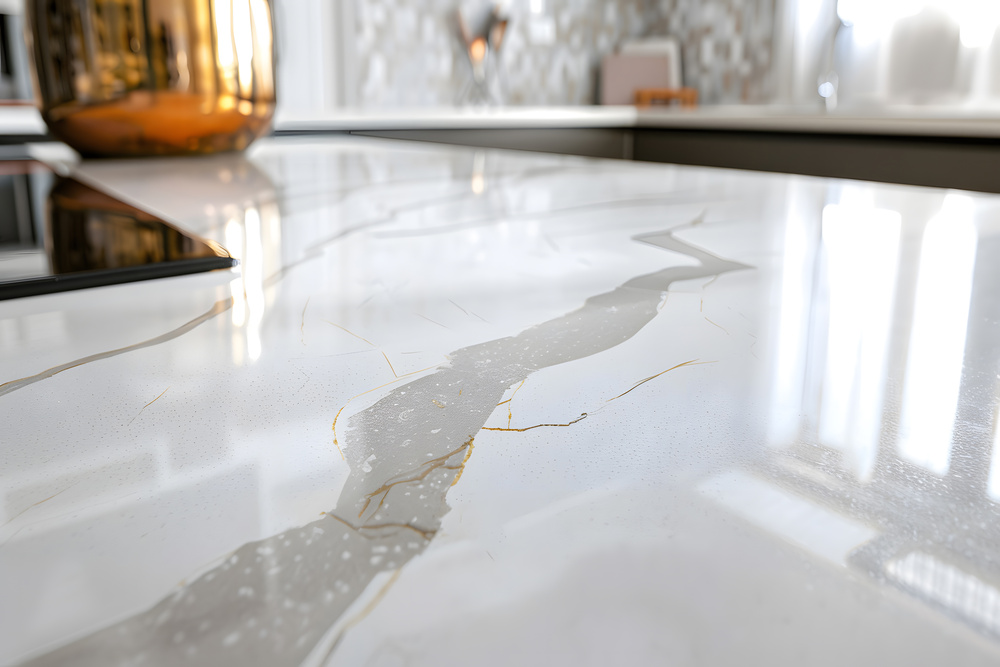
Kitchens are not tucked away at the rear of homes anymore. They’re front and center, where everybody hangs out. So those counters better look good and work hard. Surfaces that stained easily or degraded rapidly frustrated people. They now want counters that are both durable and aesthetically pleasing.
Why Hygiene Became a Priority
Raw chicken is scary stuff. So is that questionable leftover container from who-knows-when. People finally figured out that beat-up counters with deep scratches basically throw a party for bacteria. All those tiny cracks and holes? That’s where germs set up camp and refuse to leave.
Smooth surfaces changed everything. Germs bounce right off. That puddle of raw egg? Wipes away completely. No more wondering if you cleaned well enough. No paranoia about whether the counter’s really safe for making sandwiches.
And then 2020 arrived, causing everyone to become germaphobes immediately. People suddenly became curious about their counters’ materials. Would bleach be okay for them? Could daily disinfecting damage the finish? Materials that were fine in 2019 were removed by 2021.
Engineering Beats Nature
Mother Nature makes beautiful stuff, but she’s inconsistent. This piece of granite might be rock-solid. That one might have a weak spot that cracks the first time you drop something heavy. Wood looks gorgeous until moisture finds that one vulnerable grain line and warps the whole thing.
Factory-made surfaces skip the guesswork. Every batch comes out exactly the same. Technicians tweak the formula until it hits specific targets – this much heat resistance, that much stain protection. No surprises. No “oops, this slab has a defect” after installation.
The improvements keep coming too. Last year’s “impossible to stain” becomes this year’s “literally repels liquids like magic.” Scientists discover how to harden surfaces by 10% without extra mass. Someone creates a coating that immediately kills germs. The benchmark is consistently getting higher.
Strength Without Compromise
Remember when picking counters meant choosing between pretty and practical? That’s over. Now you get both in one package. Surfaces that belong in a magazine spread but also survive your kid’s chemistry homework.
People actually use their kitchens now. Not just for show. The counter functions as a desk, bar, and bakery at different times. One surface does it all. No special treatment is needed. Yesterday’s cookie decorating station becomes today’s tax-filing desk after a quick wipe.
These improvements stack up fast. Surfaces ignore UV rays streaming through windows. Some actually fix their own scratches – seriously, add heat and tiny scratches disappear like they never happened. Fingerprints? What fingerprints? Even when it’s not clean, it still looks clean. Quartz countertops are leading the trend. Companies like Bedrock Quartz are constantly busy because homeowners are replacing their outdated surfaces with durable alternatives.
The Environmental Angle
Here’s something nobody talks about though – tough surfaces help the planet. How? They last forever. Well, not forever, but close enough. Twenty years versus five years means fewer counters in landfills. Factories cleaned up their act too. Water gets recycled instead of dumped. Dust collectors prevent air pollution. Solar panels power production lines. Recycled glass and stone that used to get tossed now becomes part of new counters. All without making the final product weaker.
Conclusion
Our expectations of kitchens have significantly increased. They’re offices, restaurants, bars, and chemistry labs rolled into one. Old surfaces couldn’t keep up. All at once, new ones had to become tougher, cleaner, and more appealing. Fortunately, they did it. Today’s counters handle abuse that would’ve destroyed yesterday’s materials. And they look good doing it. The kitchen finally caught up with how we actually live.